Building material trading is one of the messier inventory businesses to run on generic accounting software. You're juggling large SKU counts, materials that need batch or lot tracking, multi-step logistics from purchase to site delivery, tight vendor credit terms, and UAE VAT compliance — all at once. A default, out-of-the-box Zoho Books setup will not handle this well. A properly configured one will. This is what that configuration actually looks like.
Inventory Management Built for Building Material Stock
This is where most implementations either succeed or quietly fail. Building material stock doesn't behave like retail inventory — costs move with the market, materials arrive in batches, and the same base product often needs to be sold in different pack sizes or as part of a bundle.
- FIFO and WAC costing. Zoho Books supports both FIFO (First-In-First-Out) and Weighted Average Cost — we configure whichever matches how your material pricing actually moves, so your cost of goods sold and margin reports are accurate, not estimated.
- Batch tracking. Cement, tiles, steel, and similar materials often need batch or lot-level tracking for quality, warranty, or supplier-recall purposes. We set up batch tracking so every unit sold can be traced back to its purchase batch.
- Custom fields. Grade, dimension, finish, brand, HS code — whatever specs your materials actually carry — added as custom fields on items, so your catalog reflects real product data, not just a name and a price.
- Auto barcode and auto SKU generation. New items get a system-generated SKU and barcode automatically on creation, removing manual numbering errors and duplicate SKUs across your catalog.
- Kit items and assembly items. Sell materials as bundles (a "starter pack" of mixed tiles, a fitting kit) while stock still deducts correctly from the individual component items behind the scenes.
- Inventory control. Negative stock blocking so you can't sell what isn't physically there, plus credit limit and credit due date blocking so overdue or over-limit customers are stopped automatically at the sales order stage — not caught after the fact by your accounts team.
Sales Order to Shipment — Full Transit Visibility
A sales order shouldn't just sit as a static document. We configure the full chain so every order is trackable from the moment it's placed to the moment payment is received:
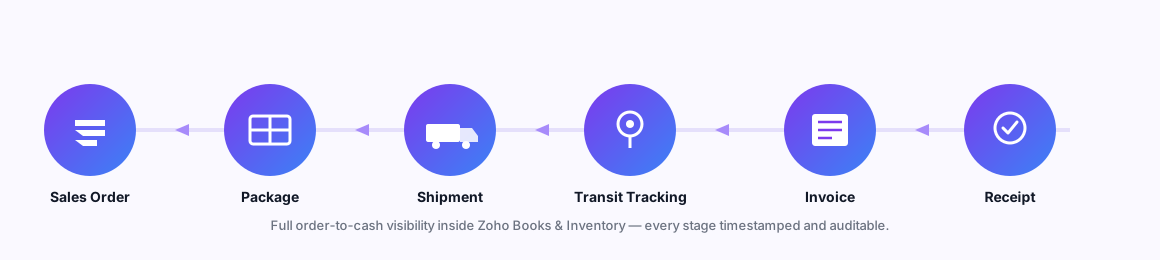
Sales Order → Package → Shipment → transit tracking → Invoice → Receipt — each stage timestamped, so your team (and your customer, if you choose to share status) can see exactly where an order stands at any point, instead of chasing updates over WhatsApp.
Procurement — Procure to Pay, End to End
The purchasing side gets the same treatment. A clean procure-to-pay chain keeps vendor commitments, warehouse receiving, and accounts payable all working off the same records instead of three disconnected spreadsheets:
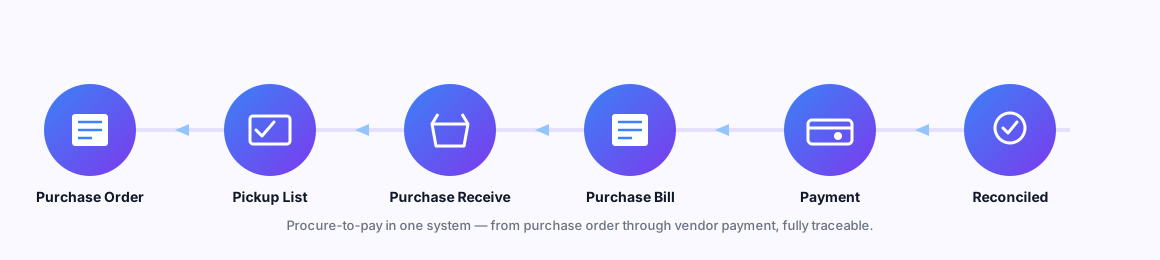
Purchase Order → Pickup List → Purchase Receive → Purchase Bill → Payment. Every purchase is traceable from the original order through to the vendor payment that closed it — which makes vendor reconciliation and audit prep dramatically faster.
Banking, Accounts & Reporting
- Auto bank reconciliation with bank integration — transactions feed in automatically and match against your books, instead of manual monthly reconciliation.
- Complete accounts tracking across receivables, payables, and general ledger, structured around how your business actually operates.
- Detailed report tracking — margin by item, aging by customer, stock valuation, and the specific reports your management team actually reviews, not just Zoho's defaults.
Mobile Access
The Zoho Books mobile app is set up alongside the desktop configuration, so approvals, quick invoice checks, and customer balance lookups don't require someone to be at a desk — useful for site visits, supplier meetings, or when a decision-maker is traveling.
Custom Printing for UAE Business Needs
Many building material traders already have pre-printed stationery — letterheads, delivery note pads, specific tax invoice layouts required by long-standing customers. We build custom print templates that match your existing pre-printed stationery exactly, rather than forcing you onto Zoho's generic templates.
Customer Management & Credit Control
- Detailed customer statement of account (SOA) with PDC tracking — post-dated cheques are logged against the customer record and reflected in the SOA, which is standard practice for UAE trading businesses but not something Zoho tracks by default.
- Multi-level approvals — from a simple single sign-off to a full multi-stage approval chain for discounts, credit notes, or large purchase orders, matched to your actual internal authority structure.
- Credit control management — credit limits and credit due dates enforced at the point of sale, not discovered during month-end review.
Selling on Marketplaces — API Integration
If you're also planning to sell through Amazon, Noon, Shopify, or similar platforms, we set up API integrations that sync orders and stock levels back into Zoho Books, so your marketplace sales and your warehouse stock stay in sync instead of running as a separate, disconnected sales channel.
How SysVera Implements This
As SysVera, we handle the complete implementation — configuration, data migration, custom fields and print templates, integrations, and the workflow logic behind all of the above — plus training so your team is actually confident using it, and ongoing support and custom development as your business changes. This isn't a one-time setup and handoff; it's a system we stay involved with.
Not sure where to start?
Tell us your setup — we'll map the right next step for your business.
Get In Touch →